
Police and Security Operations Desk in OTAI Studio
Configure OTAI Studio for a police authority or security company desk: queue and priority Agents, plus chatbots limited to hours, lost property, and recruitment.

This article is for an operational security organization: a police authority’s administrative desk, or a security company’s service desk. The work is tickets about office hours, lost property, recruitment, site-service requests, facilities, and internal IT. OTAI Studio runs Full On-Prem on that organization’s servers. It files and classifies those tickets. Staff still handle every case and close every ticket.
Public and customer FAQs stay on information the organization already publishes. Duty plans, patrol routes, investigation methods, and site-security procedures do not go into Studio, into FAQ areas a chatbot can search, or into Agent descriptions.
Agents to create
Open Agents. Sync the live values and describe the administrative meaning of each one. Classification is zero-shot from those descriptions.
Queue classification (OTOBO or Znuny queues; on Zammad, Groups — Zammad does not use queues):
| Queue | When it applies |
|---|---|
| Front desk | Non-emergency visits, opening hours, where to hand in a report in person |
| Lost property | Items handed in or asked for through the published process |
| Recruitment | Applications and questions about published vacancies |
| Site service | A security company’s client asking for a scheduled guard posting or a contract contact |
| Facilities | Station or office building faults, vehicles as workshop tickets |
| Internal IT | Accounts and workplace devices for staff |
Describe Site service as scheduling and contact mail. Do not describe posts, routes, or equipment.
Priority classification:
- Highest: the public counter or the lost-property system is down during published hours
- High: a facility fault that closes a public entrance today
- Normal: a lost-property or recruitment request inside the usual time
- Low: a hours question already covered by the website
Minimum confidence: Normal (80%), then human review. No fallback that treats a report as recorded. See Classification agents.
Summarization into a DynamicField so the next clerk sees the request without re-reading the thread. See Summary agents.
Reply draft only for lost-property and recruitment acknowledgements. Formal style. A person reviews and sends. Runtime stores the draft and does not send it. See Reply draft agents.
Run conditions
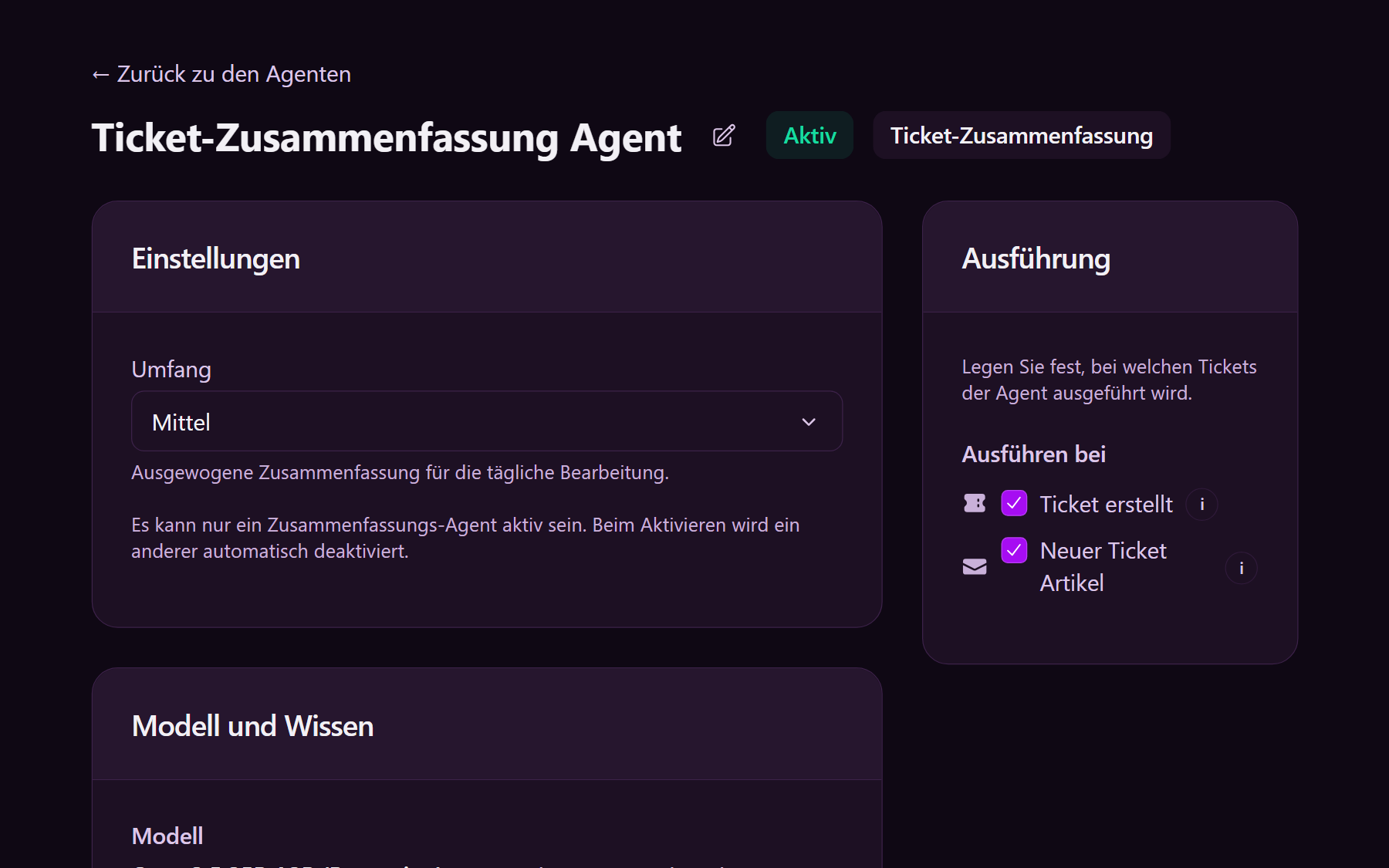
Run conditions on every ticket Agent:
- Ticket created
- State
new - Target field empty, so a queue a supervisor already set stays set
- Activate
A police authority and a separate security-company contract desk are two installations when they use two ticket systems. Each has its own Agents and Chatbots.
Chatbots
Chatbots. FAQ articles stay in the ticket system. See FAQs.
Public. Active. Public FAQs only. Answers only from a matching source. Publish:
- Station or office hours and the public entrance
- How lost property is handed in (place, hours, what to bring)
- How to make a non-emergency visit (where to go; not what an investigation does next)
- How to apply for a published vacancy
The public chatbot cannot create a ticket. The welcome text should name the published phone number for urgent contact and state that the chat does not take reports.
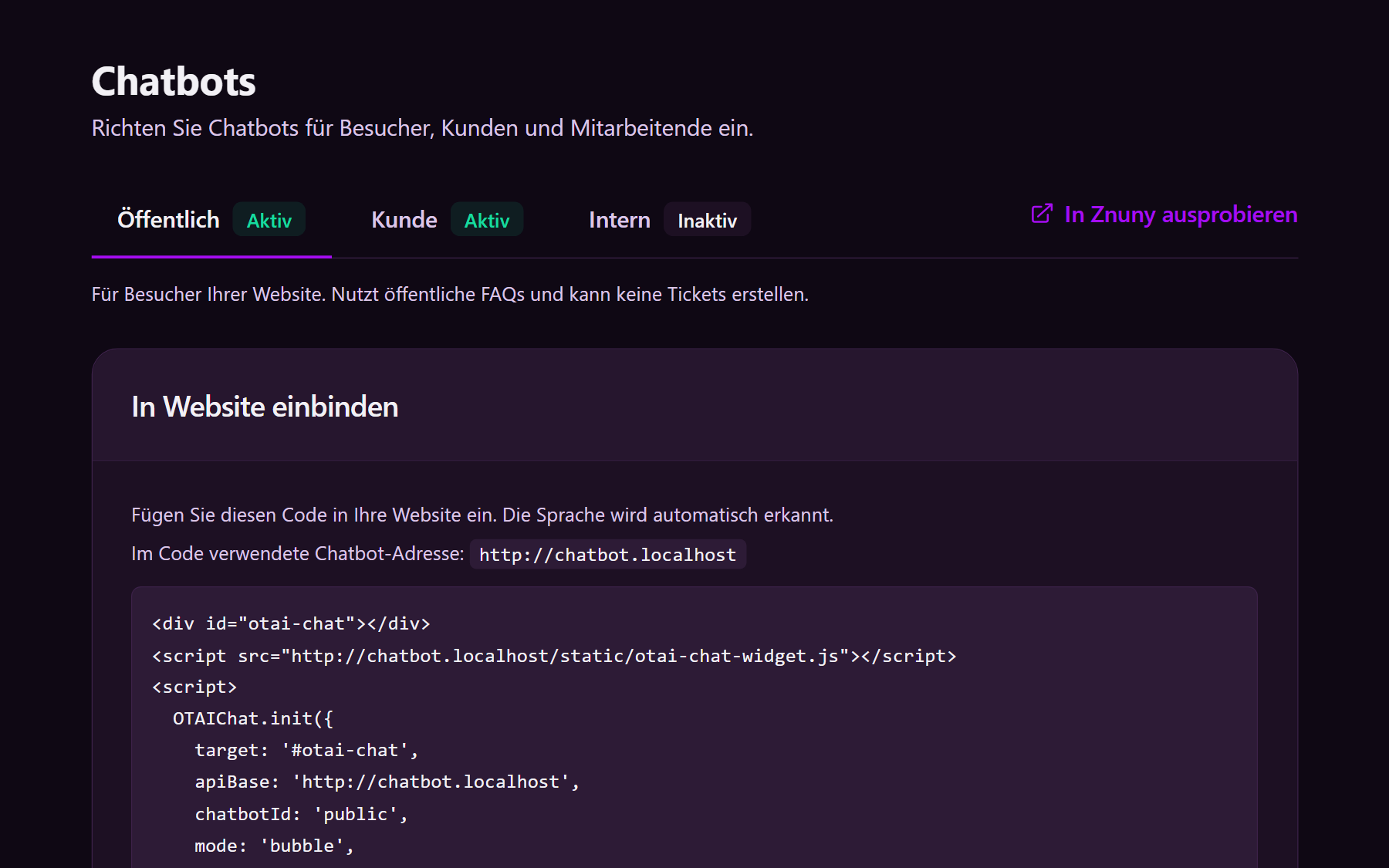
Customer, if clients or registered visitors have a portal (typical for a security company). Search Customer FAQs about contract contacts and scheduled service windows. Allow Create ticket only for those service requests. See the customer chatbot.
Internal for staff, via AI Chat. Search Internal FAQs that say which queue receives lost property versus recruitment. Do not load operational procedures into extra knowledge. See the agent chatbot.
A Free Cloud Trial is a way to try the screens. The live desk is Full On-Prem. Runtime on those servers runs the Agents and writes back through the OTOBO or Znuny connector.